


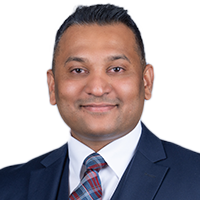
MBBS, MD, MSc, FRCPC
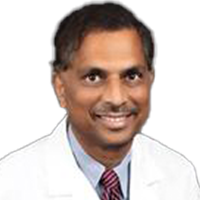
MD, MBA, FASTRO, FABS, FICRO, FACRO
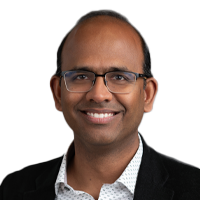
MBBS, MD (Radiotherapy), MRCP FRCR PhD FRCP
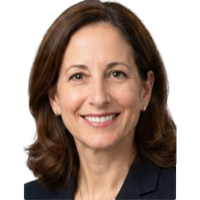
MD, MS
MD
MD
MBBS, MD, MSc, FRCPC
Dr. Vimoj J. Nair, MBBS, MD, MSc, FRCPC is an Associate Professor in the Division of Radiation Oncology at the University of Ottawa, Clinician Investigator at the Ottawa Hospital Research Institute (OHRI), and Vice Chair of the Ontario Cancer Research Ethics Board (OCREB), one of Canada’s leading oncology research ethics boards. He also serves as Editor-in-Chief of the Canadian Association of Radiation Oncology (CARO) Cureus Journal and contributes to the editorial and peer-review activities of several international academic journals.
Dr. Nair completed his MD in Radiation Oncology from Pt. B.D. Sharma Post Graduate Institute of Medical Sciences (PGIMS), Rohtak, India. Following residency training, he pursued specialized Neuro-Oncology Fellowship training at the Advanced Centre for Treatment, Research and Education in Cancer (ACTREC), Tata Memorial Centre, Mumbai, India, along with advanced brachytherapy fellowship training at the Texas Cancer Clinic, USA, through the prestigious American Brachytherapy Society (ABS) Fellowship Program. He subsequently completed Fellowship training in Robotic Radiosurgery and Stereotactic Body Radiotherapy (SBRT) at the University of Ottawa, Canada, and obtained Fellowship certification from the Royal College of Physicians and Surgeons of Canada (FRCPC). He also holds a Master’s degree (MSc) in Clinical Trials from the University of London, United Kingdom, and a Professional Diploma in Clinical Research (PDCR), India. In addition, he has completed advanced leadership and academic development training through the University of Ottawa.
Dr. Nair is internationally recognized for his expertise in neuro-oncology, pediatric radiation oncology, stereotactic radiotherapy (SBRT/SRS), advanced imaging, and precision radiation medicine. His clinical and translational research focuses on radiation-induced neurotoxicity, adaptive and high-precision radiotherapy, artificial intelligence and virtual reality applications in radiation oncology, and innovative biologic approaches including gut microbiome research in glioblastoma treatment outcomes. His work is centered on integrating emerging technologies with clinically impactful, patient-focused cancer care.
His work has contributed to several pioneering innovations in radiation oncology, including publication of the first Canadian experience using SBRT for medically inoperable kidney tumors, introduction of novel platinum fiducial markers in place of traditional gold fiducials for MRI-based real-time tumor tracking in robotic radiosurgery, and serving as the clinician researcher for the development and validation of one of the world’s first immersive virtual reality–based radiation treatment planning and contouring platforms at the University of Ottawa. His multidisciplinary research collaborations span translational and clinical domains including animal models, neurophysiology, radiology, advanced imaging, radiation physics, and precision radiotherapy technologies.
He holds leadership roles within national and international oncology collaborations, including the Canadian Cancer Clinical Trials Group (CCTG) CNS/Brain Disease Site Committee, and has contributed to the development of national and international oncology guidelines in both adult and pediatric cancers.
An invited international speaker and educator, Dr. Nair has delivered keynote lectures, expert panel discussions, contouring workshops, and academic sessions at major radiation oncology and neuro-oncology conferences across North America, Europe, and Asia. He has authored over 100 peer-reviewed publications and scientific abstracts and has been recognized for excellence in research, education, innovation, and leadership in radiation oncology, including the Best Teacher in Radiation Oncology Award.
Beyond his academic contributions, Dr. Nair is deeply committed to mentorship and trainee development, actively supporting medical students, residents, fellows, and research trainees in clinical and scholarly advancement. He is also passionate about community engagement and knowledge translation initiatives aimed at improving cancer awareness, education, and equitable access to oncology care within visible minority and underserved communities.
MD, MBA, FASTRO, FABS, FICRO, FACRO
I am a radiation oncologist and clinical leader, currently serving as Academic Chief at Allegheny Health Network and VP of Medical Affairs at Varian Medical Systems, Inc. My work focuses on advancing innovative radiation techniques to improve outcomes and access.
Leadership & Roles
Clinical & Research Focus
Honors & Contributions
MBBS, MD (Radiotherapy), MRCP FRCR PhD FRCP
Clinical Director, Consultant Clinical Oncologist
Dr Amarnath Challapalli is a Consultant Clinical Oncologist and Clinical Director of the Bristol Cancer Institute, University Hospitals Bristol and Weston NHS Foundation Trust, specialising in the management of urological cancers and non-melanoma skin cancers. He undertook his medical and postgraduate training in clinical oncology in India and in the UK, achieving Fellowship of the Royal College of Radiologists (FRCR) and the Royal College of Physicians, London (FRCP). He completed a PhD at Imperial College, London in January 2014.
Dr. Challapalli is a Prostate Cancer UK (PCUK) Clinical Champion. He championed the improvement of patient access to PSMA-PET scans and has set up the Lutetium PSMA Radio ligand service in Bristol. He is a clinical expert for the NICE evidence review groups (Sheffield & PenTAG) and for appraisals of Relugolix and Erdafitinib. He is a member of the NICE Kidney cancer guidelines development committee and the Clinical Reference Group of the National Kidney and Prostate Cancer Audit. He is a panel member of Mirrors in Medicine, an International Case-based professional development platform. He organises and lectures in the biennial RCR skin cancer study day and has co-developed the skin cancer e-learning module for the RCR. He has been appointed as the RCR Learning lead and education secretary for the Bristish Uro-oncology Group (BUG). He has developed and leads the brachytherapy service for non-melanoma skin cancers at BHOC. He is a member of BUG, ESTRO and GEC-ESTRO Head&Neck brachytherapy group. He is a panel member of national and international guideline committees and is currently involved in developing the GEC-ESTRO skin brachytherapy guidelines.
Dr. Challapalli is actively involved in research into urological and non-melanoma skin cancers. He has been appointed as the NIHR lead for Cancer trials. He is the UK Chief Investigator for the adjuvant Cemiplimab trial in high-risk squamous cell carcinoma (C-POST trial), REACT-Cemi trial, IMPACT trial (Cemiplimab in advanced BCC), BET-PSMA trial, PSMA-DC trial and a Co-Chief Investigator of the ACE trial in prostate cancer and EPIC trial in penile cancer. His work has been published in peer-reviewed journals and presented at national and international meetings.
MD, FACR, FASTRO
Prabhakar Tripuraneni, MD, FACR, FASTRO is a distinguished leader and pioneer in the field of radiation oncology. He graduated from Guntur Medical College in South India and completed his residency training at the University of Alberta and the University of California, San Francisco. For 43 years, Dr. Tripuraneni has been on staff at Scripps Green Hospital in La Jolla, California, where he has served as Head of Radiation Oncology for the past 28 years and previously as Chief of Staff.
A pioneer in coronary vascular brachytherapy, Dr. Tripuraneni performed the first such procedure in North America to prevent coronary in-stent restenosis. His work as co–principal investigator on several landmark multi-institutional clinical protocols ultimately led to FDA approval of the technology. More recently, he served as Chief Medical Officer of ViewRay, Inc., leading efforts that secured FDA 510(k) approval for MR-guided radiation therapy systems.
In 2007, Dr. Tripuraneni served as President and Chair of the Board of Directors of the American Society for Radiation Oncology (ASTRO), becoming the first Asian American elected to lead the world’s largest radiation oncology society. He was instrumental in establishing the FASTRO designation and developed the ASTRO Practice Accreditation Program, personally conducting more than 100 accreditation surveys. In recognition of his profound impact on the field, he was awarded the ASTRO Gold Medal in 2013, the society’s highest honor.
Dr. Tripuraneni's academic contributions include over 65 peer-reviewed publications—including two in The New England Journal of Medicine—16 book chapters, one textbook, and more than 500 scientific presentations. He has served for nearly a decade on the FDA Radiological Devices Advisory Panel and the Nuclear Regulatory Commission’s Advisory Committee on the Medical Uses of Isotopes (ACMUI). He has been selected by his peers as one of The Best Doctors in America every year since 1996.
Outside of his medical career, Dr. Tripuraneni is an avid global trekker who has completed major climbs including Mount Whitney, Mount Kilimanjaro, Mont Blanc, and the Grand Canyon rim-to-rim seven times. He is also a dedicated community leader in San Diego, serving as a founding member and Chair of the Board of Trustees of the Shiva Vishnu Temple of San Diego.
MD, MS
Karyn Aalami Goodman, MD, MS, is Professor and Vice Chair for Research and Quality in the Department of Radiation Oncology at the Icahn School of Medicine at Mount Sinai, and Associate Director for Network Clinical Research at the Mount Sinai Tisch Cancer Center, a NCI-Designated Comprehensive Cancer Center. She is also Co-Director of the Center of Excellence for Pancreatic Cancer.
Dr. Goodman is responsible for developing the infrastructure and resources to support cancer clinical trials across the Mount Sinai Health System.
Before joining Mount Sinai in September 2019, Dr. Goodman was Associate Director of Clinical Research at the University of Colorado Cancer Center, where she had worked since 2015. Previously, Dr. Goodman was the head of Gastrointestinal Radiation Oncology at Memorial Sloan Kettering Cancer Center from 2007 to 2015. She began her academic medicine career as an Assistant Professor, Radiation Oncology, at Stanford University in 2004.
An internationally recognized expert on gastrointestinal cancers, Dr. Goodman has served with several organizations, including the American Society of Clinical Oncology, to establish national treatment guidelines and best practices. She serves as Co-chair for the National Cancer Institute Gastrointestinal Steering Committee. Dr. Goodman’s research focuses on improving outcomes and reducing toxicity in patients with gastrointestinal malignancies. With extensive experience as principal investigator on clinical trials, she is involved in development of therapeutic protocols combining radiation, chemotherapy, targeted agents, and immunotherapy.
Dr. Goodman earned her MD from Stanford University and MS from Harvard School of Public Health. She completed an internship in internal medicine at Stanford and residency training in radiation oncology at Memorial Sloan Kettering Cancer Center.
MD
Steven J. Frank, MD, is an endowed tenured professor of Radiation Oncology and holds the Bessie McGoldrick Professorship in Clinical Research at The University of Texas MD Anderson Cancer Center. Dr. Frank is the Executive Director of the Particle Therapy Institute and Deputy Head of Strategy for the Division of Radiation Oncology. Dr Frank was instrumental in facilitating the restructuring of MD Anderson’s proton therapy center through an asset acquisition and a subsequent expansion of a second proton therapy center to advance Intensity Modulated Proton Therapy (IMPT).
Dr. Frank is amongst the first, if not the first, to use IMPT to treat head and neck tumors, and he is the Principal Investigator of an NIH/NCI-sponsored multi-institutional Phase II/III randomized trial in advanced stage oropharyngeal cancer that compares outcomes after chemoradiation given by IMRT versus IMPT. Dr. Frank has approximately 300 peer-reviewed publications, has authored many book chapters, and has recently published the first textbook on Proton Therapy based on the MD Anderson experience. Dr. Frank’s lab is studying the biologic enhancement factor of proton therapy and FLASH radiotherapy for head and neck cancer, as well as MRI-Assisted Radiosurgery (MARS) as the next generation of prostate brachytherapy.
Dr. Frank’s expertise in MRI radiotherapy has led to the development and FDA approval of multiple novel positive-contrast implantable markers for use in MRI-guided LDR and HDR prostate brachytherapy and external beam radiation therapy. As founder of the company, C4 Imaging, Dr. Frank has developed the MRI marker technology at MD Anderson, has been granted 31 national and international patents, developed three FDA approved products, and has established MRI-Assisted Radiosurgery (MARS) at MD Anderson for the treatment of prostate cancer. He has funding from the NIH, the Prostate Cancer Foundation, the Texas Ignition Fund, Hitachi and MD Anderson, and he has also raised multiple rounds of private equity financing to advance the C4 technology.
Dr. Frank has served as the past President and Chairman of the Board of the American Brachytherapy Society and is the 2023 recipient of the Ulrich Henschke Award, the highest honor awarded by the ABS on a practitioner of brachytherapy. Dr. Frank has served as the chair for the head and neck oral boards for the American Board of Radiology over the last six years and will join the Board of Trustees in October 2023. Prior to entering medicine, Dr. Frank served in the military as a U.S. Navy Diver and submarine officer on the fast attack nuclear submarine USS Batfish (SSN-681). He is married to Dr. Ivy Frank, a veterinarian, and his hobbies include golf, flying and coaching softball for his four daughters.
MD
Dr. Jyoti Mayadev is a board-certified radiation oncologist specializing in the treatment of gynaecologic and breast cancers, with expertise in combining radiation with immunotherapy and other novel therapeutics, and image-guided brachytherapy (IGBT), in which a radioactive source is precisely placed inside or near a tumour. She leads all clinical and translational research aspects of gynaecologic and image-guided brachytherapy and works closely with multidisciplinary teams—including medical, surgical and gynaecologic oncologists—to deliver comprehensive, compassionate care.
She is a professor of radiation medicine and applied sciences, assistant vice chair of developmental therapeutics, section chief of gynaecologic oncology, and co-leader of the gynaecologic oncology disease team at the Moores NCI-designated Comprehensive Cancer Centre at UC San Diego Health.
Dr. Mayadev's research focuses on advancing curative therapies in cervical cancer through the development of national clinical trials, early-phase therapeutic studies, and the integration of immunotherapy with chemoradiation. She serves as co-chair of the NCI-funded National Research Group (NRG) Oncology Cervical Cancer Committee and is the national principal investigator for Phase I-III NCI-funded trials GOG 9929, NRG GY017, and NRG GY037, which evaluate optimal treatment sequences and immunotherapy with chemoradiation for locally advanced disease.
The Mayadev Laboratory continues to advance innovations that improve outcomes and survival in cervical cancer, and has secured more than $4.5 million in grant funding. Her collaborative R01 grant, Immunogenomic Predictors of Outcomes in Patients with Locally Advanced Cervical Cancer Treated with Immunotherapy and Chemoradiation, builds on biospecimens from NRG GY017, while her NCI R50 grant, NCI Clinical Trial Research Strategy, Harnessing of Equity, and Implementation, aims to promote equitable access to novel cancer treatments. She also serves as co-principal investigator of the global phase III CALLA trial—the largest study to date evaluating immunotherapy with radiation in cervical cancer. Dr. Mayadev has been recognized with numerous honours, including the NRG Oncology Outstanding Service Award, ASTRO GYN chair appointment, Educator of the Year award, and Deans Team Award.
Before joining UC San Diego in 2017, Dr. Mayadev was the director of brachytherapy at UC Davis, where she established their image-guided brachytherapy program and led gynaecologic and breast oncology research. She has performed over 8,000 brachytherapy procedures and is the founding editor-in-chief of The Image Guided Brachytherapy Handbook, published by Springer. She has more than 200 peer-reviewed publications and research has appeared in leading journals including Jama Oncology, Lancet Oncology, Journal of Clinical Oncology, and Nature Communications. A frequent invited speaker for the American Society of Clinical Oncology, American Brachytherapy Society and the American Society for Radiation Oncology, she continues to advance the field through education, mentorship and innovation.
Dr. Mayadev completed her radiation oncology residency as chief resident at the University of Washington Medical Centre in Seattle, following an internal medicine internship at Providence Portland Medical Centre and earning her medical degree from Case Western Reserve University School of Medicine.
Beyond her professional pursuits, Dr. Mayadev is passionate about wellness, environmental sustainability, and maintaining an active lifestyle. A vegan and lifelong outdoor enthusiast, she enjoys swimming, paddle boarding, yoga, biking, hiking and organic gardening.